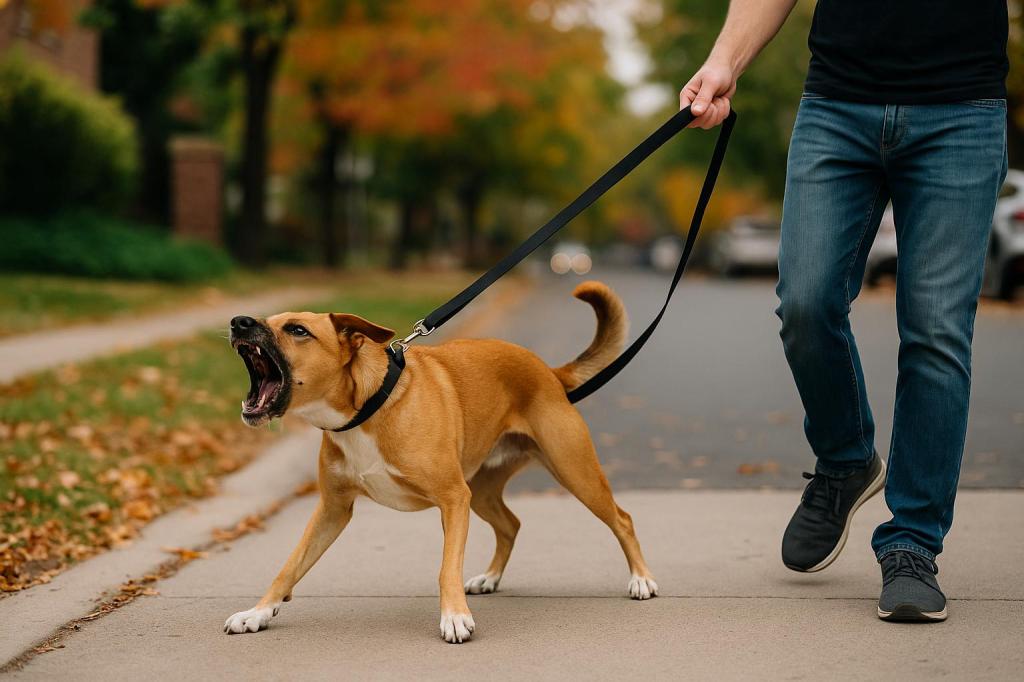
🐶 “Walks Feel Stressful Instead of Enjoyable…”
If your dog:
- Barks
- Lunges
- Pulls toward or away from triggers
👉 You’re likely dealing with leash reactivity
And you’re not alone 💜
🧠 First—What You Need to Know
Reactivity is NOT:
❌ Disobedience
❌ Stubbornness
👉 It’s an emotional response (fear, frustration, or excitement)
That means:
👉 We don’t “correct” it—we change how your dog feels
🧩 Step 1: Management Comes First
Before training:
✔ Avoid crowded areas
✔ Create distance from triggers
✔ Walk during quieter times
👉 Prevent reactions whenever possible
📏 Step 2: Find Your Dog’s Threshold
Your dog should:
✔ Notice the trigger
✔ Stay calm
✔ Take treats
👉 This is where learning happens
🧁 Step 3: Start Counterconditioning
When your dog sees a trigger:
👉 Mark (“Yes!”)
👉 Give a treat
Repeat:
Trigger → treat
Trigger → treat
👉 Build: “Triggers = good things”
👀 Step 4: Add Engagement
Teach your dog to:
✔ Look at you
✔ Check in
✔ Stay connected
👉 You become their safe point
🔁 Step 5: Practice the Engage/Disengage Game
✔ Look at trigger
✔ Look back at you
✔ Reward
👉 This builds emotional control
⏱ Step 6: Progress Slowly
Over time:
✔ Decrease distance gradually
✔ Increase difficulty carefully
👉 Never rush progress
🚫 What NOT to Do
❌ Don’t use punishment tools
❌ Don’t force exposure
❌ Don’t train over threshold
👉 These often make reactivity worse
💜 What Progress Looks Like
✔ Less intense reactions
✔ Faster recovery
✔ More focus on you
✔ Greater tolerance of triggers
✨ Final Thoughts
Reactivity isn’t fixed overnight—but with the right plan:
👉 You can create calmer, more confident behavior 💜
📣 Need Help with Leash Reactivity?
🐾 Always Stay Pawsitive Dog Training
Helping you turn stressful walks into calm, connected experiences.
 Always Stay Pawsitive Dog Training
Leave a comment