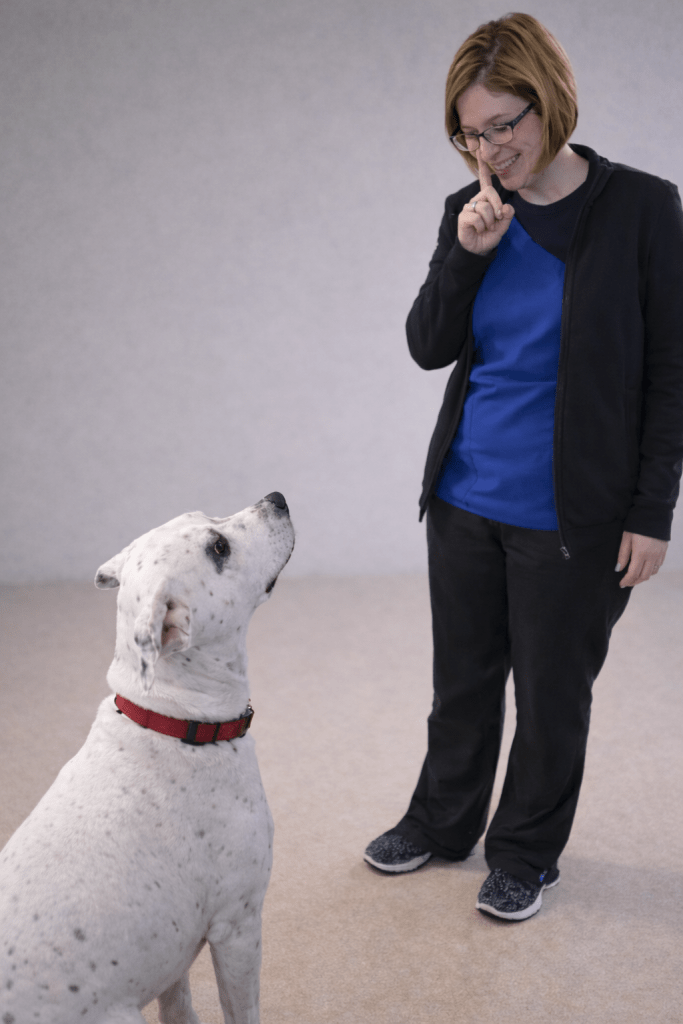
🐶 “Do You Use Corrections?”
This is one of the most common questions I get as a dog trainer.
And my answer is simple:
👉 I focus on teaching, not punishing.
🧠 Why Punishment Doesn’t Teach What You Want
Punishment may stop a behavior in the moment—but it doesn’t teach your dog what TO do instead.
For example:
- If you punish jumping… your dog may stop temporarily
- But they still don’t know how to greet appropriately
👉 That’s where confusion happens.
⚠️ The Risks of Punishment-Based Training
Using fear, discomfort, or intimidation can:
- Damage trust between you and your dog
- Increase anxiety or stress
- Suppress warning signals (like growling)
- Lead to worse behavior over time
👉 It may look like it’s “working”… but it often creates deeper issues.
💜 What I Do Instead
I use positive reinforcement training, which focuses on:
✔ Rewarding desired behaviors
✔ Teaching clear alternatives
✔ Building confidence
✔ Strengthening your bond
🦴 Real-Life Example
Instead of correcting unwanted behavior:
👉 We teach what TO do:
Jumping → Sit
Pulling → Walk beside you
Barking → Look at you
And we reward those choices.
🧠 Why This Works Better
Dogs learn faster when they:
✔ Understand what’s expected
✔ Feel safe and confident
✔ Are motivated to succeed
👉 Learning becomes clear—and even enjoyable.
🚫 Common Misconceptions
❌ “You’re just bribing the dog”
❌ “Dogs need to know who’s boss”
❌ “You have to be dominant”
👉 These are outdated myths—not supported by modern training science.
💜 The Bigger Picture
Training isn’t just about behavior—it’s about:
✔ Communication
✔ Trust
✔ Relationship
✨ Final Thoughts
You don’t need fear to teach your dog.
The most effective training comes from:
👉 Clarity, consistency, and kindness 💜
📣 Want to Train the Positive Way?
🐾 Always Stay Pawsitive Dog Training
Helping you build a confident, well-behaved dog—without fear.
 Always Stay Pawsitive Dog Training
Leave a comment