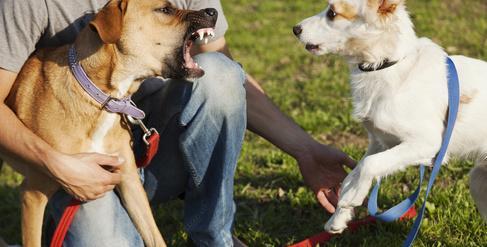
🐶 “My Dog Goes Crazy on Walks…”
If your dog barks, lunges, or reacts on leash—you’re not alone.
This is called reactivity, and it’s one of the most misunderstood behaviors.
🧠 What is Reactivity?
Reactivity is an overreaction to a trigger.
Triggers can include:
- Other dogs
- People
- Bikes
- Cars
👉 It’s not “bad behavior”—it’s an emotional response.
💥 Why Dogs Become Reactive
Dogs may react because they feel:
- Frustrated (can’t get to something)
- Fearful or unsure
- Overstimulated
👉 The behavior (barking/lunging) is how they cope.
⚠️ It’s Not About “Disobedience”
Your dog isn’t ignoring you on purpose.
When emotions are high:
👉 Learning is low
That’s why yelling or correcting doesn’t fix it.
🐾 Step 1: Create Distance from Triggers
Distance is your BEST tool.
👉 More distance = more calm
👉 Less distance = more reaction
Work where your dog can still think and respond.
🧁 Step 2: Change the Association
We want your dog to think:
👉 “Trigger = good things happen”
How:
✔ See trigger → give treat
✔ Stay under threshold
✔ Repeat consistently
👀 Step 3: Build Engagement
Teach your dog to:
✔ Look at you
✔ Check in
✔ Stay connected
👉 You become more important than the environment.
🧠 Step 4: Avoid Flooding
Flooding = too much exposure too fast
🚫 Dog parks
🚫 Busy sidewalks
🚫 Close interactions
👉 This often makes reactivity worse.
💜 What Progress Looks Like
✔ Less intense reactions
✔ Faster recovery
✔ Ability to stay calm at greater distances
✨ Final Thoughts
Reactivity isn’t something to “correct”—it’s something to understand and work through.
With patience and the right approach, your dog can improve 💜
📣 Need Help With a Reactive Dog?
🐾 Always Stay Pawsitive Dog Training
Helping you create calmer, more confident walks—without force.
 Always Stay Pawsitive Dog Training
Leave a comment