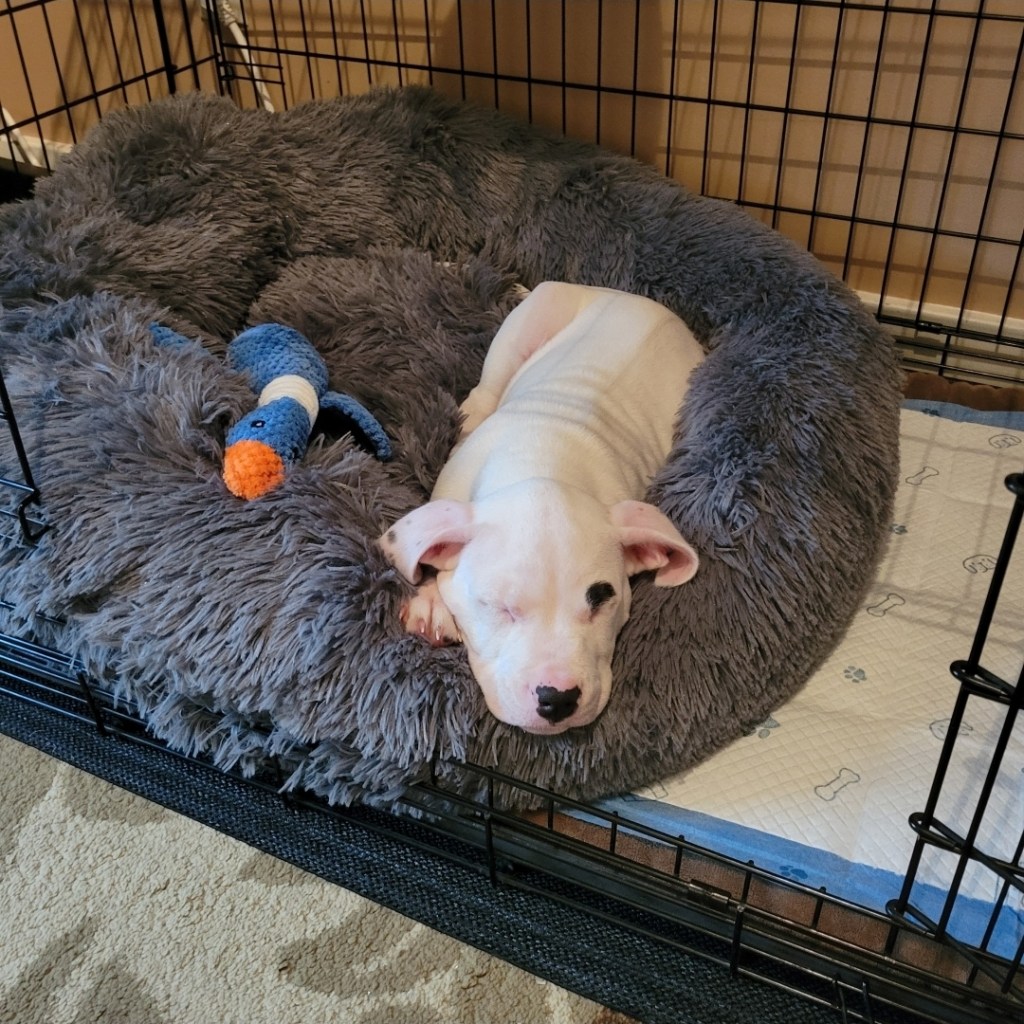
🐶What is Crate Training?
Crate training teaches your dog to see their crate as a safe, comfortable space—not a place of punishment.
When done correctly, a crate becomes:
- A place to relax
- A tool for house training
- A safe space when you can’t supervise
🧠Why Crate Training is Important
Dogs naturally seek out small, den-like spaces. A properly introduced crate can:
✔ Help with potty training
✔ Prevent destructive behavior
✔ Reduce anxiety when used correctly
✔ Create structure and routine
🏡Step 1: Create a Positive Crate Environment
Make the crate inviting from the start!
Include:
- Soft bedding
- Safe chew toys
- Occasional treats inside
💡 Leave the door open and allow your puppy to explore at their own pace.
🦴Step 2: Build Positive Associations
Start pairing the crate with good things:
👉 Toss treats into the crate
👉 Feed meals inside
👉 Praise calm behavior
Goal:
Your puppy should choose to go into the crate.
🚪Step 3: Introduce the Door Gradually
Once your puppy is comfortable going in:
- Close the door briefly (just a few seconds)
- Stay nearby
- Open it before your puppy becomes stressed
- Slowly increase duration over time.
⏱ Step 4: Build Duration Slowly
Patience is key here.
Start with:
- A few seconds
- Then a minute
- Then a few minutes
👉 Gradually work up to longer periods
Avoid rushing—this is where many people run into problems.
😴Step 5: Use the Crate for Nap Time
Puppies need a LOT of sleep (16–20 hours/day!).
Crates help:
✔ Encourage rest
✔ Prevent overtired “zoomies”
✔ Reduce biting and chaos
🚫Common Crate Training Mistakes
Avoid these to keep things positive:
❌ Using the crate as punishment
❌ Letting your puppy cry it out excessively
❌ Moving too fast in the process
❌ Only crating when you leave the house
💡 The crate should predict good things, not stress.
🐾How Long is Too Long?
General guideline:
- Puppies: age in months = max hours (approx.)
Example:
- 2-month-old puppy → ~2 hours
Always ensure:
✔ Bathroom breaks
✔ Exercise
✔ Mental enrichment
💜The Goal of Crate Training
We’re not just teaching your dog to tolerate the crate—we’re teaching them to love it.
A properly crate-trained dog:
- Enters willingly
- Settles quickly
- Feels safe and secure
✨Final Thoughts
Crate training isn’t about confinement—it’s about creating a safe space your dog can trust.
When done with patience and positive reinforcement, it becomes one of the most valuable tools in your training journey.
📣Need Help With Crate Training?
If your puppy is struggling with whining, anxiety, or settling—I can help guide you every step of the way.
🐾Always Stay Pawsitive Dog Training
Helping you build calm, confident behavior from the start.
 Always Stay Pawsitive Dog Training
Leave a comment